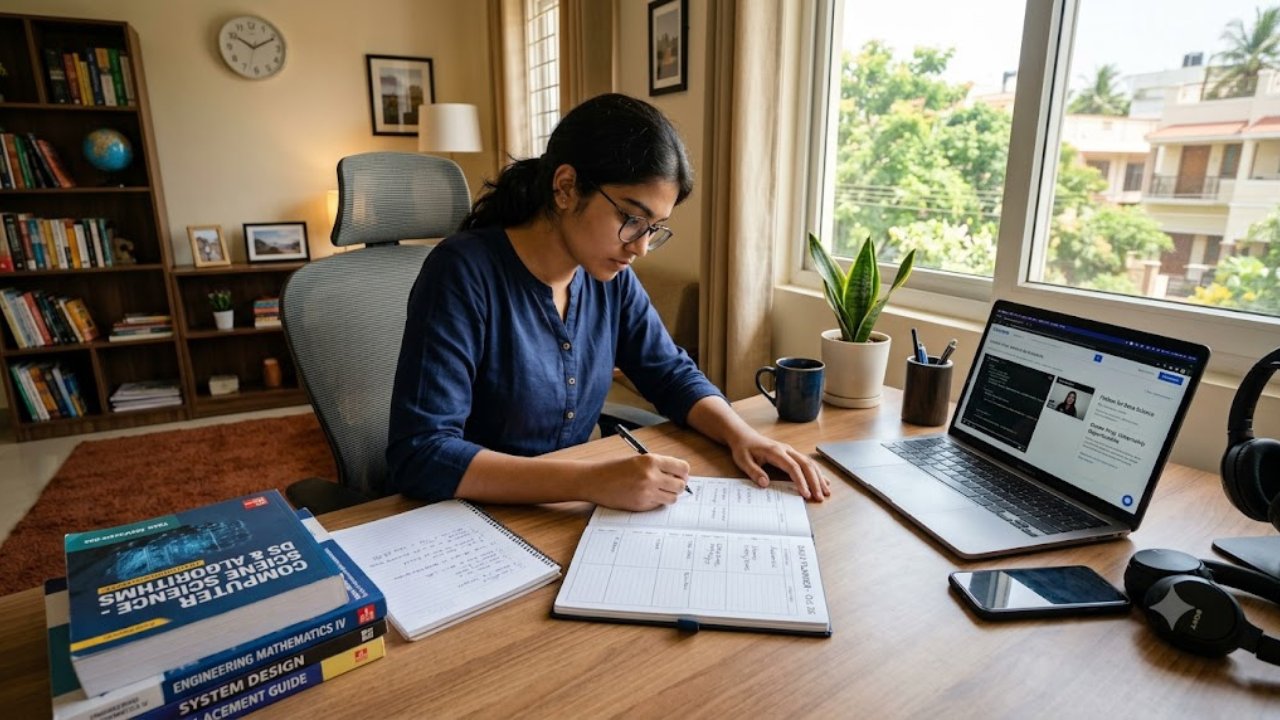
How to Balance College, Skills & Career Preparation
College is not only about attending classes, completing assignments, and preparing for examinations. It can also be a time to develop practical skills, explore career options, build professional experience, and prepare for life after graduation.
However, trying to manage college academics, skill development, internships, projects, and career preparation at the same time can feel overwhelming.
You may have classes during the day, assignments to complete, examinations to prepare for, and still want to learn new skills or apply for internships.
The solution is not to do everything at once.
Instead, students can create a realistic system that gives priority to academics while gradually making room for skills and career preparation.
Why Is It Important to Balance College and Career Preparation?
Your college education provides the academic foundation for your future. At the same time, employers and professional environments may require practical skills, communication abilities, problem-solving, teamwork, and familiarity with relevant tools.
Balancing these areas can help you:
- Stay consistent with your academic responsibilities
- Develop career-relevant skills
- Explore different career paths
- Gain practical experience
- Build projects and a portfolio
- Prepare for internships and jobs
- Avoid last-minute career preparation
- Develop better time-management habits
The goal is not to turn college into a constant productivity challenge.
The goal is to make steady progress without compromising your education or well-being.
College vs Skills vs Career Preparation
Before creating a schedule, understand what each area involves.
|
Area |
Examples |
Main Purpose |
|
College |
Classes, assignments, exams, projects |
Academic foundation |
|
Skills |
Programming, communication, digital tools, analytics |
Practical development |
|
Career Preparation |
Resume, internships, interviews, networking |
Transition to professional life |
These areas are connected.
For example, a college project can help you develop a practical skill. That project can later become part of your portfolio. The same experience can then be discussed during an internship or job interview.
So instead of treating these activities as completely separate, look for ways to connect them.
1. Set Your Priorities First
The first step toward balancing everything is understanding what needs your attention most.
Not every task has the same level of importance.
You can divide your responsibilities into three categories:
High Priority
These usually include:
- Upcoming examinations
- Assignment deadlines
- Important academic projects
- Attendance or mandatory academic activities
- Application deadlines
Medium Priority
Examples include:
- Skill development
- Personal projects
- Reading
- Practice exercises
- Career research
Low Priority
These may include activities that are useful but can be postponed when your schedule becomes busy.
The exact priorities will change throughout the semester.
For example, during examination periods, academics may need more attention. During a lighter academic period, you may have more time for internships, projects, or skill development.
2. Create a Weekly Schedule
You do not need to plan every minute of your day.
A simple weekly structure can be more practical.
For example:
|
Activity |
Suggested Focus |
|
College classes |
Academic learning |
|
Assignments |
Academic deadlines |
|
Exam preparation |
Revision |
|
Skill development |
30–60 minutes several days a week |
|
Career preparation |
1–2 focused sessions weekly |
|
Projects |
Dedicated weekly time |
|
Rest and personal time |
Regularly scheduled |
The exact amount of time depends on your course, workload, and personal circumstances.
The important part is consistency rather than spending long hours once in a while.
3. Use the 60-30-10 Approach
Students who struggle to divide their time can try a simple approach:
60% — Academics
Give the largest portion of your study-related time to:
- Classes
- Assignments
- Revision
- Projects
- Examination preparation
30% — Skills
Use another portion of your available time to develop one or two relevant skills.
10% — Career Preparation
Use a smaller portion for:
- Resume updates
- Internship research
- Job research
- Interview preparation
- Networking
This is not a strict formula.
During exams, academics may take almost all of your available study time. During vacations, you may have more time for skills and career development.
Think of this as a starting framework rather than a rule.
4. Don't Try to Learn Too Many Skills at Once
One common mistake students make is creating a huge list of skills they want to learn.
For example:
Python + Java + Digital Marketing + Data Analytics + Photoshop + SEO + Public Speaking + Excel + Web Development
Trying to learn everything simultaneously can make it difficult to develop depth in any one area.
Instead, choose one primary skill and perhaps one supporting skill.
For example:
Primary: Python
Supporting: Communication
Or:
Primary: Digital Marketing
Supporting: Data Analytics
Spend enough time practicing before moving on to another area.
5. Connect Skills With Your Degree
One of the easiest ways to manage your workload is to choose skills that complement your academic course.
For example:
BCA Students
You could explore:
- Programming
- Web development
- Database management
- Data analytics
- Cybersecurity
- Cloud technologies
BBA Students
You could explore:
- Digital marketing
- Business analytics
- Communication
- Sales
- Financial analysis
- Project management
B.Com Students
You could explore:
- Accounting software
- Financial analysis
- Excel
- Data analytics
- Taxation basics
- Business communication
Arts Students
Depending on your interests, you could explore:
- Communication
- Research
- Writing
- Digital media
- Data interpretation
- Presentation skills
The best combination depends on the career direction you want to explore.
6. Turn College Projects Into Career Projects
You don't always need separate projects for college and your career portfolio.
Whenever possible, make academic projects relevant to your interests.
For example, instead of completing a project simply to satisfy an academic requirement, consider whether you can make it demonstrate a skill you want to develop.
A project can help you demonstrate:
- Research ability
- Technical knowledge
- Analytical thinking
- Writing
- Presentation skills
- Problem-solving
- Teamwork
This approach allows one activity to support both academic and career development.
7. Start Career Preparation Early
You do not have to wait until your final semester to think about your career.
Early preparation can be gradual.
First Year
Focus on:
- Understanding your course
- Exploring career options
- Developing basic skills
- Participating in academic activities
Second Year
Focus on:
- Developing career-relevant skills
- Building projects
- Exploring internships
- Improving communication
Final Year
Focus more heavily on:
- Resume preparation
- Internships
- Job applications
- Interview preparation
- Higher-study research
- Portfolio development
This approach can make career preparation feel less overwhelming.
8. Use Your Vacations Strategically
College vacations can provide more flexibility for activities that are difficult to fit into a busy academic schedule.
Depending on your goals, you could use part of your vacation for:
- Internships
- Short-term courses
- Certifications
- Personal projects
- Portfolio development
- Career research
- Interview preparation
You do not have to spend your entire vacation working.
Even dedicating a few focused hours a day to a meaningful goal can help you make progress.
9. Learn Through Small, Consistent Sessions
You do not necessarily need three or four hours every day to develop a skill.
For many students, a 30–60 minute focused session can be easier to maintain.
For example:
Monday: Learn a new concept
Tuesday: Practice
Wednesday: Learn another concept
Thursday: Practice
Friday: Work on a small project
Saturday: Review
Sunday: Rest or plan the next week
The exact schedule can be adjusted according to your academic workload.
Consistency matters more than studying for a large number of hours once and then stopping.
10. Avoid Multitasking
Trying to study for an examination while watching a course video and checking internship listings may feel productive, but it can make it harder to focus.
Instead, divide your work into focused blocks.
For example:
Block 1: College assignment — 60 minutes
Break: 10 minutes
Block 2: Skill development — 45 minutes
Break: 10 minutes
Block 3: Career preparation — 30 minutes
During each block, focus on one activity.
11. Keep a Simple Career Tracker
A career tracker can help you see what you have already accomplished and what still needs attention.
You could maintain columns such as:
|
Area |
Current Status |
Next Step |
|
Academic performance |
Ongoing |
Complete assignments |
|
Skill |
Learning |
Practice weekly |
|
Project |
In progress |
Finish portfolio version |
|
Resume |
Drafted |
Update projects |
|
Internship |
Researching |
Apply to relevant roles |
|
Interview preparation |
Not started |
Begin basic practice |
This can prevent career preparation from becoming something you constantly postpone.
12. Don't Collect Certifications Without a Purpose
Certifications can be useful, but completing one after another without applying the knowledge may not provide much practical value.
Before starting a certification, ask:
- Does this skill relate to my career interests?
- Will I actually use what I learn?
- Can I build a project with the knowledge?
- Does it fill a specific skill gap?
- Can I realistically complete it alongside college?
A relevant certification combined with practical application can be more meaningful than collecting certificates simply to add them to your resume.
13. Build a Portfolio Gradually
You don't need ten impressive projects before creating a portfolio.
Start with one or two meaningful examples.
Your portfolio could include:
- College projects
- Personal projects
- Internship work, where permitted
- Research work
- Writing samples
- Presentations
- Case studies
- Design work
- Technical projects
As you learn more, you can continue improving it.
14. Make Time for Communication Skills
Technical or subject-specific skills are important, but communication is also useful across many careers.
Students can practice communication through:
- Presentations
- Group discussions
- College activities
- Writing
- Public speaking
- Interviews
- Student organizations
You can also practice explaining what you have learned in simple language.
If you can clearly explain what you did, why you did it, and what you learned, it can help you communicate your experience more effectively during interviews.
15. Learn to Say No
Balance also means recognizing what you cannot realistically do.
You may encounter:
- Too many courses
- Multiple extracurricular activities
- Several projects
- Internship opportunities
- Social commitments
Trying to accept everything can quickly make your schedule unmanageable.
Before taking on something new, ask:
Does this activity support my current academic or career priorities?
If not, it may be better to postpone it.
16. Don't Compare Your Progress With Other Students
One student may have completed three internships.
Another may have built several projects.
Someone else may already know multiple programming languages.
That does not mean you need to copy their timeline.
Students have different:
- Academic workloads
- Interests
- Learning speeds
- Financial circumstances
- Career goals
- Opportunities
Instead of comparing your progress with someone else's, track whether you are making consistent progress toward your own goals.
17. Protect Your Rest and Personal Time
A good career plan should be sustainable.
If you constantly sacrifice sleep, meals, relaxation, and personal time to become more productive, maintaining the routine can become difficult.
Make room for:
- Adequate sleep
- Meals
- Physical activity
- Family and friends
- Hobbies
- Breaks
- Personal time
Taking breaks does not mean you are falling behind.
Rest can help you return to your academic and career tasks with better focus.
A Sample Weekly Plan for College Students
Here is an example of how a student might structure a normal week:
|
Day |
Academic Focus |
Skill/Career Focus |
|
Monday |
Classes + assignments |
30 min skill practice |
|
Tuesday |
Classes + revision |
45 min skill practice |
|
Wednesday |
Classes + project work |
Career research |
|
Thursday |
Classes + assignments |
45 min skill practice |
|
Friday |
Revision |
Resume/portfolio work |
|
Saturday |
Academic catch-up |
Project or internship applications |
|
Sunday |
Weekly review |
Planning + rest |
This is only an example. Your schedule should reflect your actual class timings, academic workload, and personal responsibilities.
How to Know If Your Routine Is Working
Your schedule is probably sustainable if you can:
- Complete your academic responsibilities on time
- Make gradual progress on a useful skill
- Work toward career goals consistently
- Get enough rest
- Maintain personal time
- Adjust your routine during exams or busy periods
If you constantly feel behind in every area, your schedule may simply contain too many commitments.
The answer is often simplifying the plan, not adding more hours.
Frequently Asked Questions
1. How can I balance college and skill development?
Start by prioritizing academic responsibilities and allocate a small, consistent amount of time to one or two career-relevant skills. Adjust the schedule during examinations and other busy periods.
2. How many hours should a college student spend learning skills?
There is no universal number. Even 30–60 minutes of focused practice several times a week can help you make consistent progress.
3. Should academics or skills come first?
Academic responsibilities should remain an important priority because your degree is your educational foundation. Skill development can be added gradually around your academic schedule.
4. When should I start career preparation?
You can begin exploring careers and developing basic skills from the early years of college. More focused internship, resume, and interview preparation can come later as you approach graduation.
5. Should I do an internship while studying?
An internship can provide practical experience, but it should be manageable alongside your academic responsibilities. During particularly demanding academic periods, students may need to reduce other commitments.
6. How many skills should I learn during college?
Rather than trying to learn many skills at once, focus on a small number that are relevant to your interests and intended career direction.
7. Should I get certifications during college?
Relevant certifications can help you develop specialized knowledge. However, students should choose certifications based on their career goals rather than collecting certificates without a clear purpose.
8. How can I prepare for a career without neglecting my studies?
Connect career preparation with activities you already need to complete. For example, you can turn academic projects into portfolio projects and use college presentations to improve communication skills.
9. What should I do if I don't know what career I want?
Use college to explore. Try different subjects, projects, internships, workshops, and introductory courses to understand what interests you before committing to a specific direction.
10. Is it possible to balance college, skills, internships, and personal life?
Yes, but balance requires realistic expectations. Prioritize important tasks, avoid taking on too many commitments, schedule breaks, and adjust your routine when academic demands increase.