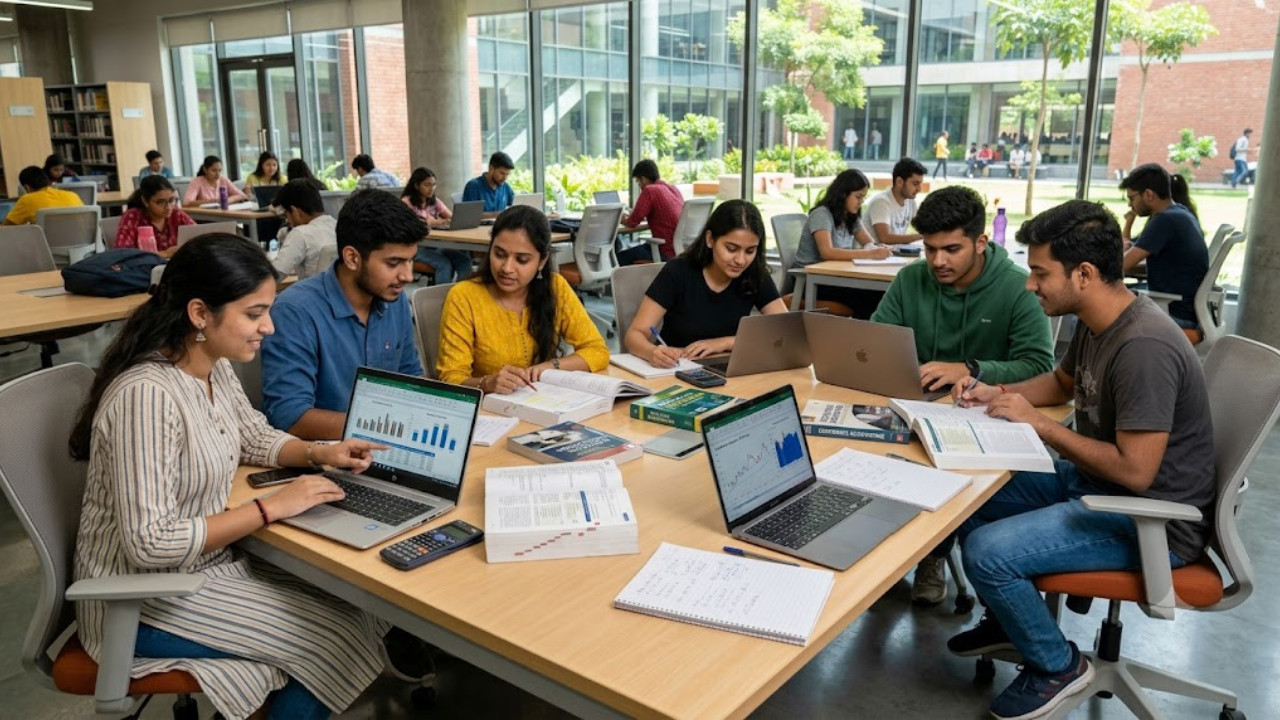
B.Com Specializations: Types, Subjects & Career Opportunities
A Bachelor of Commerce (B.Com) is an undergraduate degree that introduces students to important areas of commerce, accounting, finance, business and economics.
As students explore their academic options, they may come across different B.Com specializations such as Accounting and Finance, Banking and Insurance, Taxation, Financial Markets, Economics and Business Management. The exact specializations available can vary between colleges and universities.
Choosing a specialization can help students develop deeper knowledge in an area that matches their interests and career goals.
What Is a B.Com Specialization?
A B.Com specialization is a focused area of study within the broader field of commerce.
A general B.Com programme may introduce students to several areas of business and commerce, while a specialized programme places greater academic emphasis on a particular subject area.
Depending on the institution, a B.Com curriculum may include subjects such as:
- Financial Accounting
- Business Economics
- Business Law
- Cost Accounting
- Corporate Accounting
- Taxation
- Financial Management
- Business Communication
- Business Mathematics or Statistics
- Auditing
- Entrepreneurship
- Management
The exact subjects, specialization names and course structure can differ between institutions.
Students should therefore review the current curriculum of the college or university before selecting a programme.
Popular B.Com Specializations
There are several specialization areas that students may encounter while researching B.Com programmes.
1. B.Com in Accounting and Finance
Accounting and Finance is a popular area for students interested in financial records, accounting systems, budgeting and financial decision-making.
The specialization can provide a foundation for students who want to explore accounting or finance-related careers.
Subjects May Include
- Financial Accounting
- Corporate Accounting
- Cost Accounting
- Financial Management
- Auditing
- Taxation
- Investment Management
- Management Accounting
Skills You Can Develop
Students may develop:
- Accounting knowledge
- Financial analysis
- Numerical skills
- Attention to detail
- Budgeting
- Analytical thinking
- Understanding of financial statements
Career Opportunities
Graduates can explore roles such as:
- Accounts Executive
- Finance Executive
- Junior Accountant
- Financial Analyst
- Accounts Assistant
- Audit Associate
- Finance Operations Executive
Professional qualifications may be useful for students who want to pursue specialized accounting or finance careers.
2. B.Com in Banking and Insurance
Banking and Insurance focuses on financial services, banking operations, risk and insurance.
It can be relevant for students interested in financial institutions and customer-facing or operational roles within the financial sector.
Subjects May Include
- Banking Operations
- Insurance Management
- Financial Services
- Risk Management
- Banking Law
- Investment
- Financial Management
- Principles of Insurance
Skills You Can Develop
Students may develop:
- Financial services knowledge
- Customer communication
- Risk awareness
- Analytical skills
- Documentation skills
- Understanding of banking operations
Career Opportunities
Possible career areas include:
- Banking Executive
- Relationship Executive
- Insurance Executive
- Financial Services Associate
- Credit Operations Executive
- Banking Operations Executive
Students interested in banking examinations should research the eligibility requirements and current notifications for the examinations they intend to take.
3. B.Com in Taxation
Taxation focuses on the principles and practices related to taxation and financial compliance.
Students interested in accounting, taxation and regulatory matters may consider this area.
Subjects May Include
- Direct Taxation
- Indirect Taxation
- Income Tax
- Tax Planning
- Corporate Tax
- Financial Accounting
- Auditing
- Business Law
Tax rules and regulations can change, so students studying taxation should refer to current official requirements and legislation.
Career Opportunities
Graduates may explore:
- Tax Assistant
- Tax Executive
- Accounts Executive
- Tax Consultant
- Finance Executive
- Compliance Associate
Additional professional qualifications can be useful for specialized taxation and accounting careers.
4. B.Com in Financial Markets
Financial Markets focuses on financial instruments, investments, securities and market-related concepts.
This area can be suitable for students interested in understanding how financial markets operate.
Subjects May Include
- Financial Markets
- Investment Management
- Security Analysis
- Portfolio Management
- Financial Management
- Economics
- Risk Management
- Banking and Financial Services
Skills You Can Develop
Students may develop:
- Financial analysis
- Market research
- Investment knowledge
- Analytical thinking
- Risk assessment
- Data interpretation
Career Opportunities
Potential career areas include:
- Investment Operations
- Financial Services
- Equity Research Support
- Investment Banking Support
- Portfolio Operations
- Financial Analysis
Specialized roles in financial markets may require additional qualifications, technical knowledge or relevant certifications.
5. B.Com in Economics
A B.Com programme with an emphasis on Economics can provide greater exposure to economic concepts and their relationship with businesses and markets.
Subjects May Include
- Microeconomics
- Macroeconomics
- Business Economics
- Statistics
- Economic Policy
- International Economics
- Financial Economics
Skills You Can Develop
Students can develop:
- Economic analysis
- Research
- Data interpretation
- Critical thinking
- Understanding of markets
- Quantitative reasoning
Career Opportunities
Graduates may explore roles related to:
- Market Research
- Business Research
- Financial Services
- Economic Research Support
- Data and Business Analysis
- Consulting
Students interested in specialist economist roles may need additional higher education and qualifications.
6. B.Com in Business Management
Business Management focuses on how organisations are planned, managed and operated.
It can be relevant for students interested in management, entrepreneurship, marketing and business operations.
Subjects May Include
- Principles of Management
- Marketing Management
- Human Resource Management
- Operations Management
- Business Communication
- Entrepreneurship
- Business Strategy
- Organisational Behaviour
Career Opportunities
Graduates can explore roles such as:
- Management Trainee
- Business Development Executive
- Marketing Executive
- Operations Executive
- Sales Executive
- Business Support Executive
An MBA can also be considered by students who want to pursue management-focused higher studies.
B.Com Specializations at a Glance
|
Specialization |
Common Subject Areas |
Possible Career Areas |
|
Accounting & Finance |
Accounting, Auditing, Financial Management |
Accounting, Finance, Audit |
|
Banking & Insurance |
Banking, Insurance, Risk Management |
Banking, Insurance, Financial Services |
|
Taxation |
Income Tax, Tax Planning, Compliance |
Taxation, Accounts, Compliance |
|
Financial Markets |
Investments, Securities, Portfolio Management |
Financial Services, Investments, Research |
|
Economics |
Microeconomics, Macroeconomics, Statistics |
Research, Analysis, Business |
|
Business Management |
Marketing, HR, Operations, Strategy |
Management, Marketing, Operations |
The availability of these specializations and their exact subjects depends on the institution.
How to Choose the Right B.Com Specialization
There is no single B.Com specialization that is suitable for every student.
Your decision can depend on your interests, strengths and future career plans.
1. Consider Your Interests
Think about the subjects and activities you enjoy.
For example:
Interested in accounting and numbers?
Accounting and Finance may be worth exploring.
Interested in banks and financial services?
Banking and Insurance may be relevant.
Interested in taxation and compliance?
Taxation could match your interests.
Interested in investments and financial markets?
Financial Markets may be worth considering.
Interested in business and management?
Business Management may be suitable.
These are general associations, not fixed career rules.
2. Compare the Curriculum
Before choosing a specialization, look at the actual syllabus.
Consider:
- What subjects are included?
- How much practical learning is provided?
- Are internships available?
- Are projects part of the programme?
- What skills will you develop?
- Does the curriculum match your career interests?
The specialization name alone does not tell you everything about a programme.
3. Research Career Options
Look at actual job descriptions for the careers you are considering.
Check:
- Required qualifications
- Technical skills
- Communication skills
- Experience requirements
- Professional certifications
- Career progression
This can help you understand how your B.Com specialization connects with the workplace.
4. Think About Higher Studies
Your specialization can also influence the higher-study programmes you explore.
Possible options after B.Com include:
- MBA
- M.Com
- Professional qualifications
- Financial certifications
- Taxation-related qualifications
- Banking examinations
- Competitive examinations
Eligibility requirements differ between programmes and institutions.
Skills to Develop Alongside B.Com
A specialization can provide academic knowledge, but practical skills can also help students prepare for professional roles.
Accounting Skills
Students interested in accounting and finance can develop their understanding of:
- Financial statements
- Bookkeeping
- Accounting principles
- Financial analysis
- Auditing
Learning accounting software can also complement academic knowledge.
Excel and Data Skills
Spreadsheet skills can be useful across accounting, finance, operations and business roles.
Students can learn:
- Formulas
- Data organisation
- Pivot tables
- Charts
- Basic data analysis
Communication Skills
Communication is useful in interviews, presentations, client interactions and workplace collaboration.
Digital Skills
Students can explore digital tools relevant to their career interests, including:
- Accounting software
- CRM platforms
- Analytics tools
- Digital marketing platforms
- Business applications
Analytical Thinking
Commerce graduates often work with financial, business or market information. Developing the ability to interpret information and solve problems can be valuable across different roles.
Career Opportunities After B.Com
A B.Com specialization can provide a foundation for careers across several business and financial functions.
Depending on their specialization, skills and experience, graduates can explore:
- Accounting
- Finance
- Banking
- Insurance
- Taxation
- Auditing
- Business Development
- Marketing
- Operations
- Financial Services
- Business Analysis
- Entrepreneurship
The actual career path depends on the graduate's qualifications, skills, experience, employer and chosen industry.
Can You Change Your Career Path After B.Com?
Yes. A B.Com specialization does not necessarily determine your entire professional career. For example, a student who studied Accounting and Finance may later move into business analysis after developing relevant analytical and technology skills.
Similarly, a student with a Banking and Insurance background may explore financial services, sales or business development. Additional qualifications, internships, certifications and work experience can influence career direction.
This is why students should think of their specialization as a foundation, rather than a permanent career label.
Higher Studies After B.Com
Students who want to continue their education have several options.
M.Com
An M.Com can provide deeper academic knowledge in commerce, accounting, finance and related subjects. It may be relevant for students interested in advanced commerce studies, research or academic pathways.
MBA
An MBA can be considered by graduates interested in management, marketing, finance, human resources, operations or business analytics. Admission requirements vary by institution.
Professional Qualifications
Students interested in specialized career paths can explore professional qualifications related to:
- Accounting
- Taxation
- Finance
- Investment
- Banking
Students should check the current eligibility, examination structure and recognition of any professional qualification before enrolling.
Competitive Examinations
B.Com graduates can also explore various competitive examinations where their degree meets the educational eligibility criteria. Eligibility varies by examination, so students should always check the latest official notification.
B.Com Specialization vs General B.Com
Students often wonder whether a specialized B.Com programme is better suited to them than a general B.Com.
A general B.Com can provide broader exposure to different areas of commerce.
A specialized B.Com can provide greater academic focus on a particular area.
The right choice depends on:
- Career goals
- Subject interests
- Curriculum
- Practical learning
- Internship opportunities
- Higher-study plans
Neither option automatically guarantees better career outcomes. Students should compare the actual curriculum and opportunities provided by each institution.
How to Build Your Career During B.Com
Students can begin developing career skills while completing their degree.
1. Take Relevant Internships
An internship can help you understand how accounting, finance, banking, marketing or other business functions operate in professional environments.
2. Work on Practical Projects
Try to connect academic concepts with real-world examples.
For example:
- Analyse a company's financial statements.
- Prepare a basic market research report.
- Create a business plan.
- Study a company's marketing strategy.
- Prepare a financial budgeting exercise.
3. Learn One Complementary Skill
Choose a skill related to your career goals.
For example:
- Accounting + Excel → Finance and Accounting
- Commerce + Data Analysis → Business Analysis
- Commerce + Digital Marketing → Marketing
- Finance + Financial Modelling → Financial Analysis
4. Build a Professional Profile
Students can gradually build their profiles through:
- Internships
- Projects
- Certifications
- Workshops
- Competitions
- Professional networking
5. Understand Employer Requirements
Search for entry-level positions that interest you and note the skills employers commonly request.
This can help you identify skills you should develop before graduation.
Future Scope After B.Com
Commerce continues to be relevant across businesses because organisations require professionals who understand areas such as finance, accounting, operations, marketing and business management.
At the same time, technology is changing how many business functions operate.
Accounting, finance and business professionals increasingly encounter:
- Digital financial systems
- Data analytics
- Automation
- Cloud-based business tools
- Digital banking
- AI-assisted applications
Students can prepare for these changes by combining their commerce education with digital literacy, analytical thinking, communication and practical experience.
The future scope of B.Com therefore depends not only on the specialization but also on how students develop their skills and adapt to changing workplace requirements.
Frequently Asked Questions
1. What are the main B.Com specializations?
Common specialization areas include Accounting and Finance, Banking and Insurance, Taxation, Financial Markets, Economics and Business Management. The options available depend on the institution.
2. Which B.Com specialization is best?
There is no single specialization that is best for every student. The appropriate choice depends on your interests, career goals, strengths and the curriculum offered by the institution.
3. Which B.Com specialization is best for banking?
Students interested in banking may consider Banking and Insurance, Finance or related commerce programmes. However, banking careers can have different eligibility requirements depending on the position or examination.
4. Is B.Com in Accounting and Finance useful for an accounting career?
Accounting and Finance can provide a foundation in accounting, financial management and related subjects. Students interested in specialised accounting careers may also need additional professional qualifications.
5. What can I do after B.Com in Finance?
Graduates can explore areas such as finance operations, financial analysis, banking, accounting, financial services and related roles, depending on their skills and qualifications.
6. Can I do an MBA after B.Com?
Yes. B.Com graduates can consider MBA programmes, subject to the eligibility and admission requirements of the institution and programme.
7. Can I get a job after B.Com without doing an MBA?
Yes. Graduates can explore entry-level roles in accounting, finance, banking, sales, marketing, operations, business development and other areas. An MBA is one possible higher-study pathway, not a universal requirement for employment.
8. Which skills should I learn during B.Com?
Useful skills can include Excel, accounting software, financial analysis, communication, data analysis, presentation and digital tools. The most relevant skills depend on your intended career.
9. Is general B.Com different from specialized B.Com?
Yes. A general B.Com typically provides broader exposure to commerce subjects, while a specialized B.Com places greater emphasis on a particular area. The exact structure varies by institution.
10. What are the higher-study options after B.Com?
Students can consider options such as M.Com, MBA, professional qualifications, specialized finance or accounting programmes and eligible competitive examinations. Requirements vary by programme.
Conclusion
A B.Com specialization can help students develop deeper knowledge in an area of commerce that matches their interests and career goals.
Students can explore specializations such as Accounting and Finance, Banking and Insurance, Taxation, Financial Markets, Economics and Business Management. Each area can lead toward different career paths, although actual career outcomes depend on qualifications, skills, experience, employer and industry.
Choosing a specialization should therefore involve more than looking at which course sounds popular. Students should compare the subjects, curriculum, practical learning opportunities, internships, career requirements and higher-study options before making a decision.
Building complementary skills such as Excel, financial analysis, communication, digital tools and data analysis can also help students prepare for changing workplace requirements.